Industrial Reflections
PAISAJES PRODUCTIVOS-INFRAESTRUCTURAS OCUPADAS
La ciudad de Hamburgo es fiel reflejo de la historia de una comunidad íntimamente ligada a la producción. Una historia que ha sido determinante en la forma en la que la ciudad ha ocupado el territorio. El paisaje, o colección de paisajes, que caracterizan este estratégico punto dentro del transcurso del río Elba es producto directo de la implementación de una compleja red de infraestructuras industriales y de transporte a lo largo del tiempo.
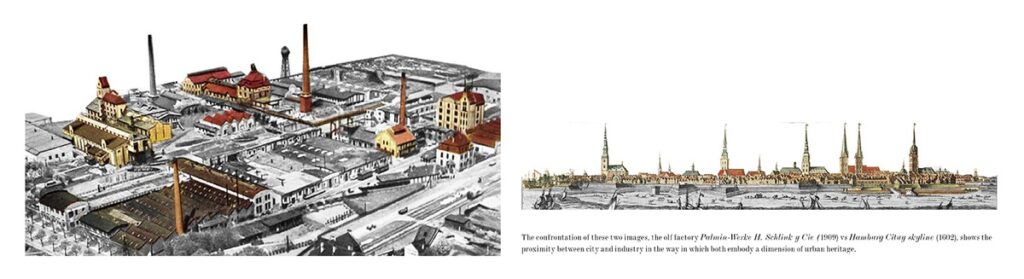
Frente a la tradicional ciudad europea cuya imagen más característica suele venir normalmente asociada a las cualidades del tejido residencial de su casco histórico, el patrimonio de la ciudad de Hamburgo se amplía más allá de la vivienda, la plaza o la calle para incorporar además toda una rica tradición ligada al ámbito industrial. Este “otro” patrimonio se extiende del paisaje, como hemos mencionado, a la arquitectura para abarcar una infinita colección de objetos, maquinarias, construcciones o vehículos con los que la ciudad ha construido su propia identidad.
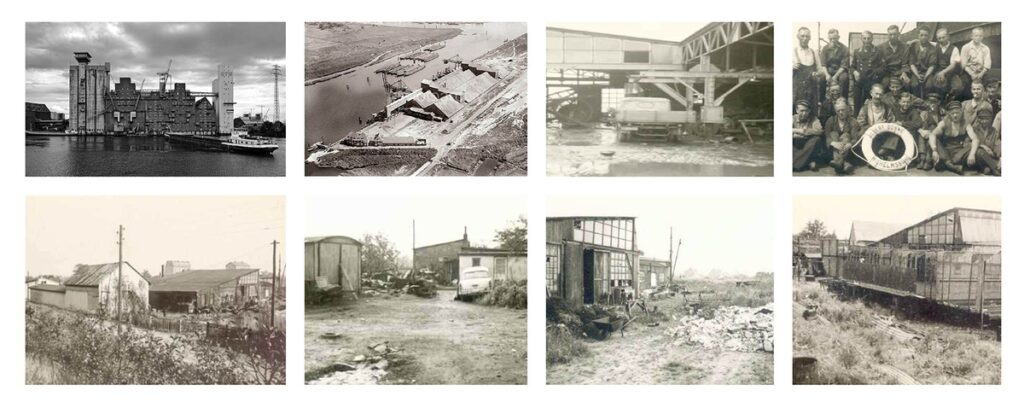
Es en este sentido que podríamos hablar entonces de una “monumentalidad industrial productiva” como elemento identitario de toda una comunidad. Sin embargo , este monumento es un patrimonio vivo ya que permanece activo en el tiempo. Un monumento absolutamente contemporáneo que por su localización o por sus cualidades espaciales (dimensionales, estructurales, etc…) puede ser capaz de sobrevivir a una actividad concreta para convertirse en un “andamio” flexible capaz de adaptarse a nuevos tiempos, a nuevos usos.El lugar de trabajo propuesto , el futuro distrito de Elbinselquartier en Elbe Island of Wilhemsburg es claramente representativo de estos paisajes tan característicos de la ciudad de Hamburgo. Un lugar además construido sobre las huellas de una importante industria pasada: la old margarine factory on Jaffestrasse de la que, inteligentemente se han preservado dos de sus edificios más singulares.
Su posición ente canales de transporte, comunicación y recreativos (Jaffe Davids Canal and Amann Canal), las industrias y manufacturas actualmente presentes (desde las más pesadas a los talleres de oficios y servicios) la frondosidad de la vegetación de ribera cultivated areas used for agriculture, marsh and green land, la heterogénea mezcla de usos, desde los ya mencionados productivos a los residenciales hacen de este lugar un potencial modelo de convivencia entre nuevas tipologías y otras que siempre han estado allí.
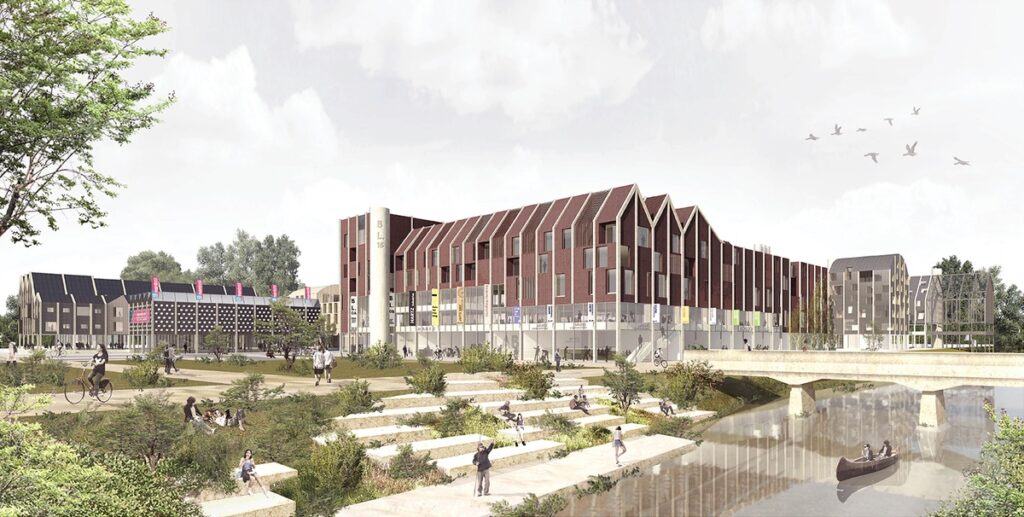
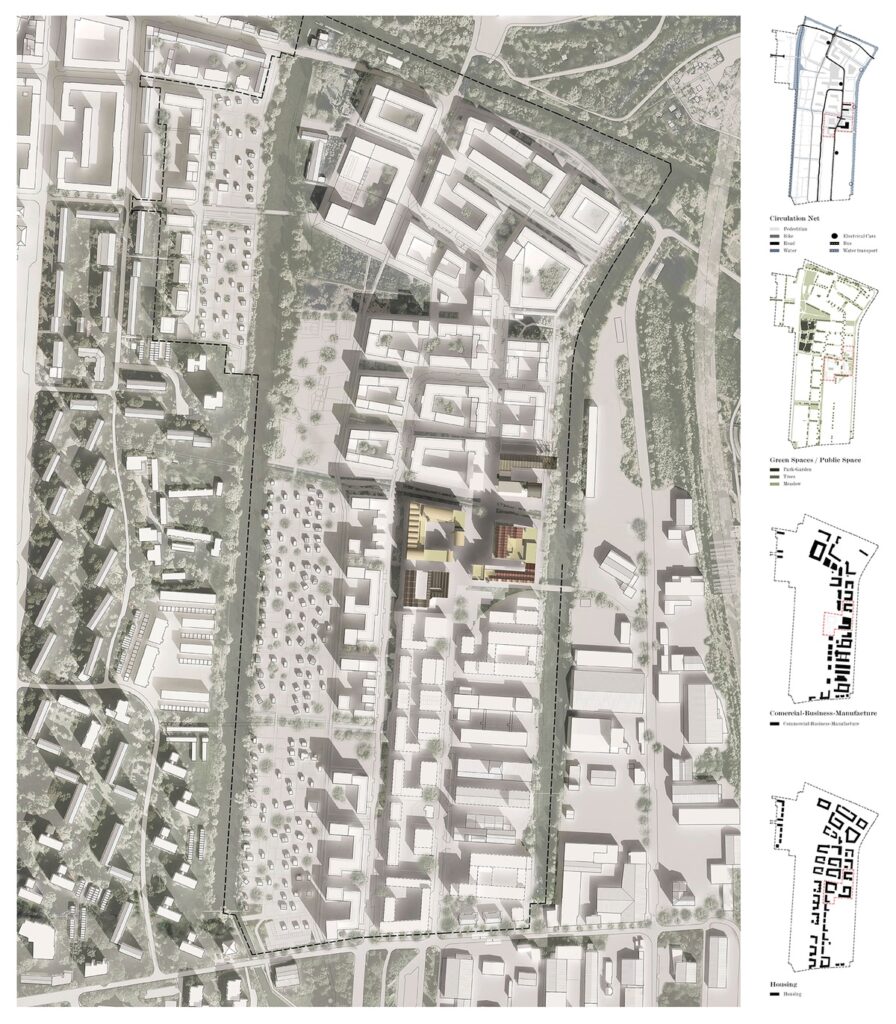
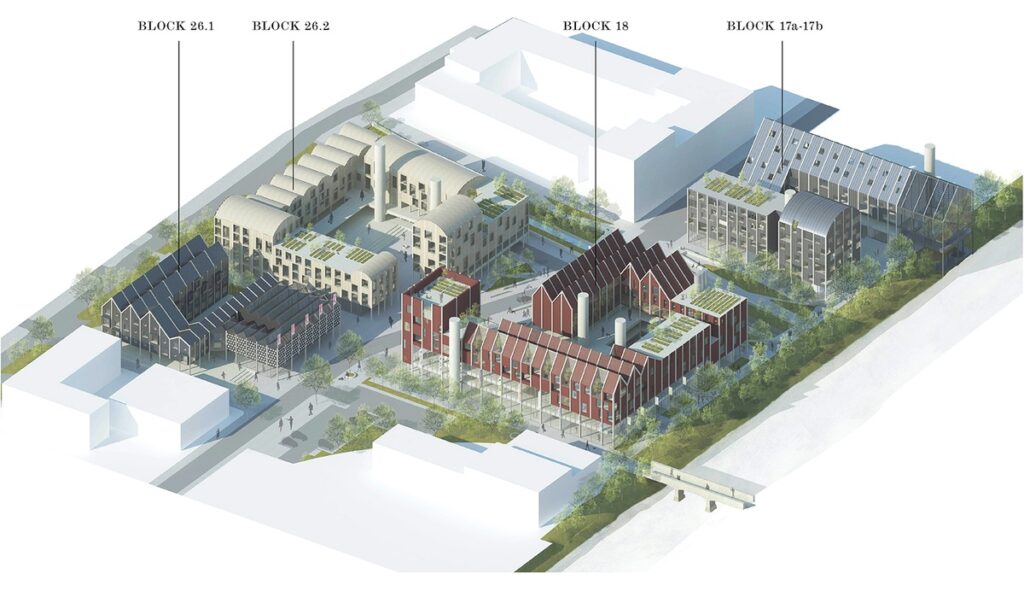
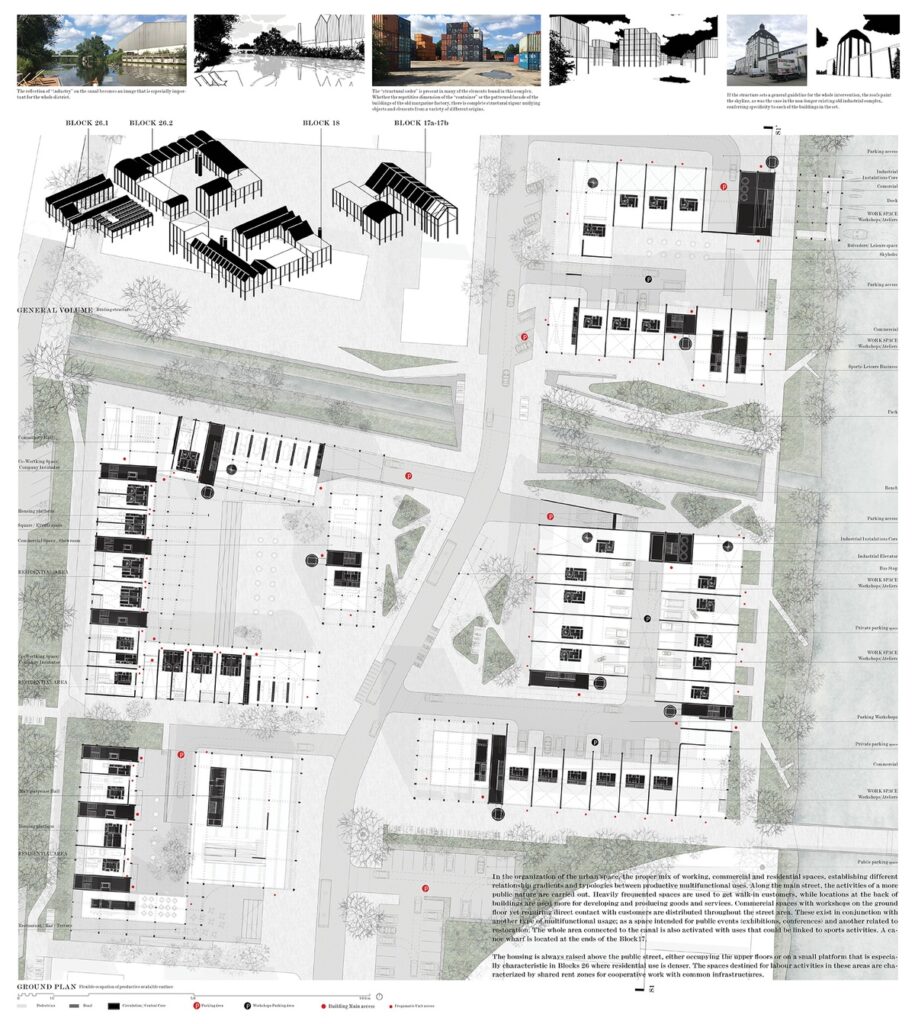
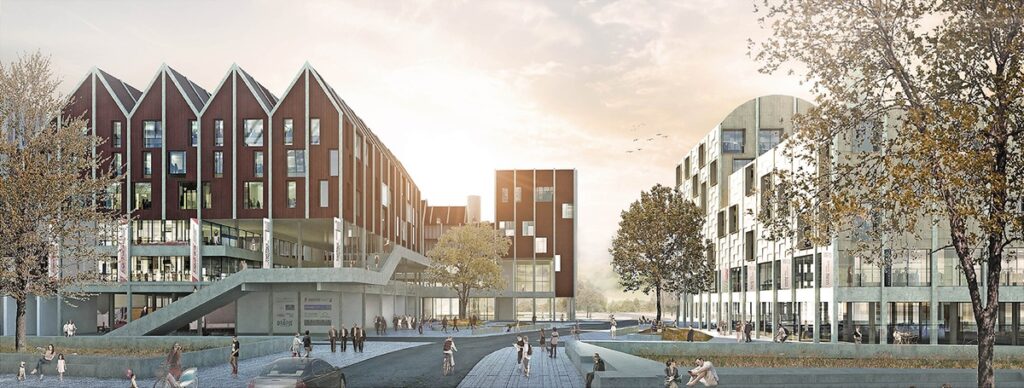
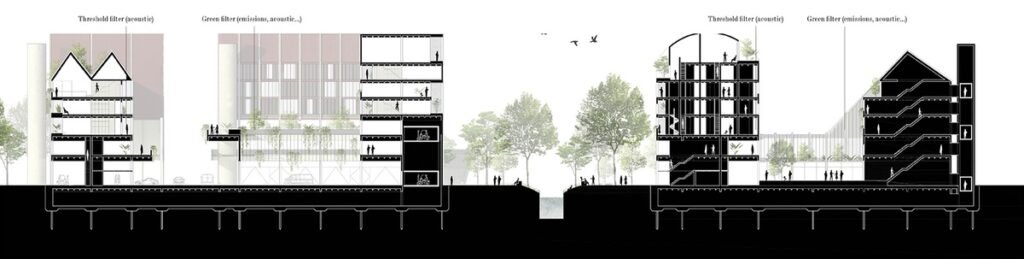
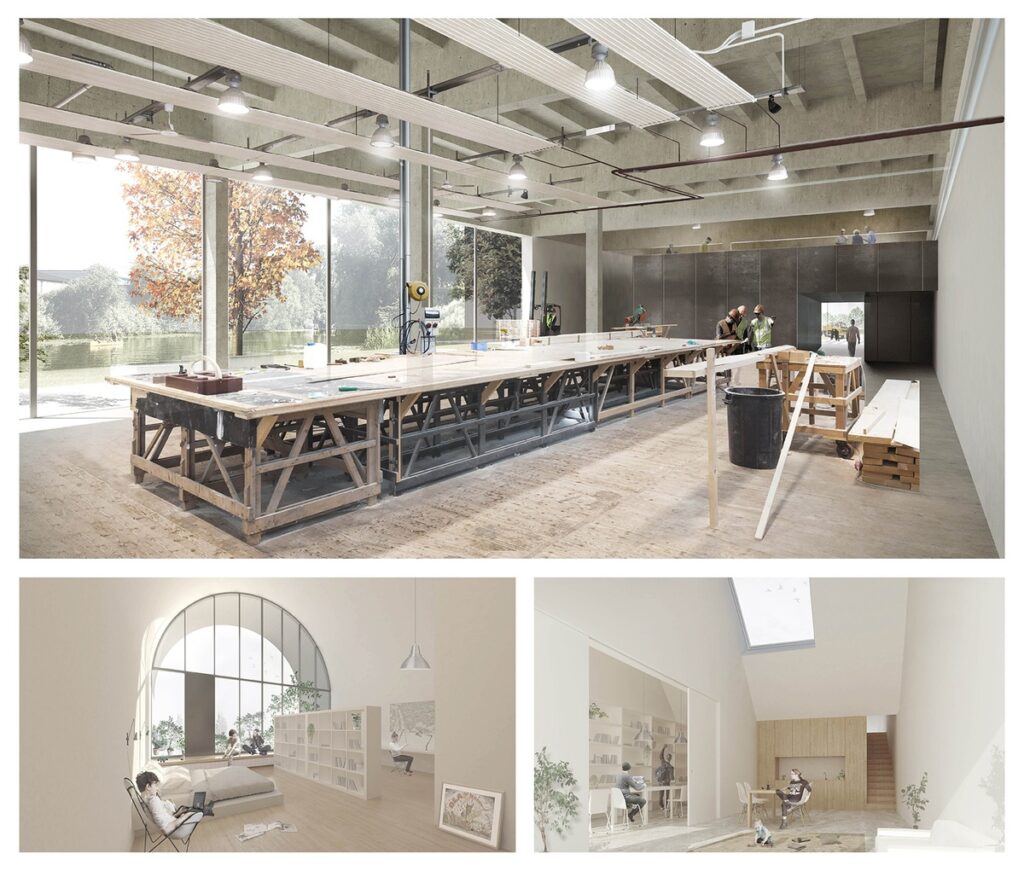
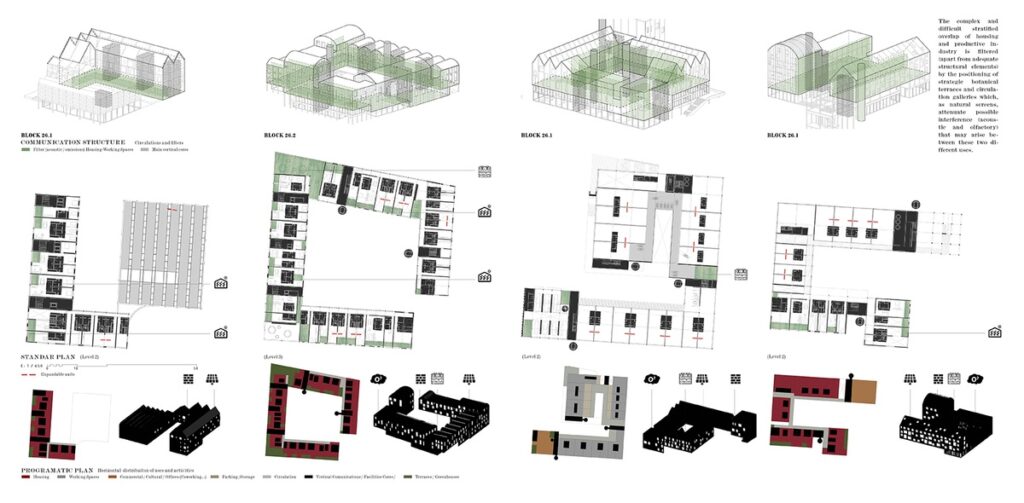
Industrial Reflections convierte esta particular situación hibrida en la base de un proyecto capaz de dialogar con la imagen de la ciudad a través de distintas escalas y de distintos tiempos: por un lado la historia de tan complejo emplazamiento que queda atrapada en las diversas preexistencias (residenciales e industriales) y por otro el deseode desarrollar un distrito integrado, un barrio de funciones mixtas y usos sociales, donde vivienda, trabajo y comercio convivan equilibradamente.
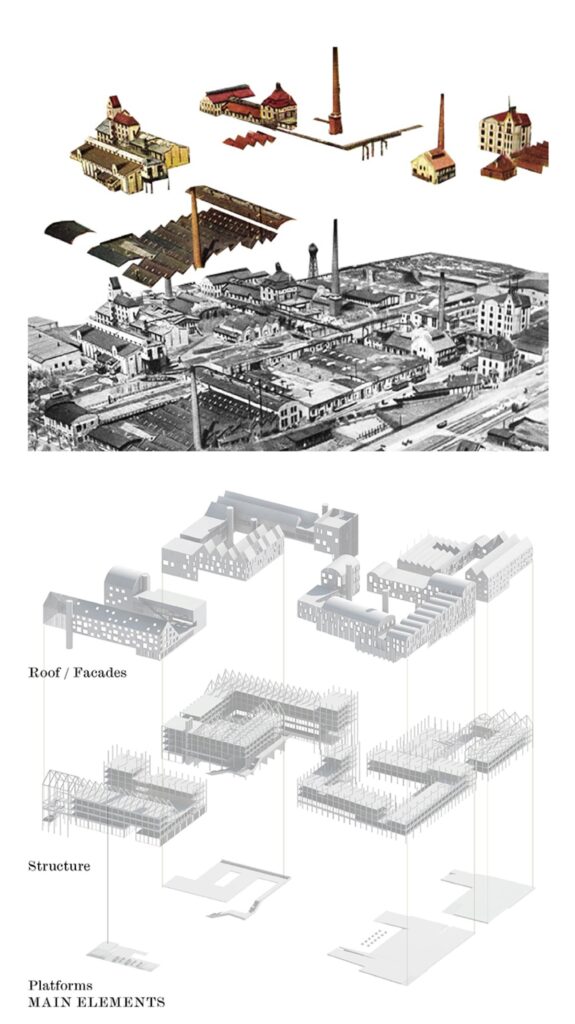
Industrial Reflections parte por tanto de la identificación de ciertos materiales constitutivos del lugar de proyecto con los que definir un lenguaje propio y especifico heredero del pasado-presente- industrial, de las infraestructura actuales y de la manera en la que este distrito se ha ido construyendo.
PRODUCTIVE LANDSCAPES-OCUPPIED INFRAESTRUCTURES
The city of Hamburg is a faithful reflection of the history of a community closely linked to production. A history that has been a determining factor in the way in the city has occupied the territory. The landscape, or collection of landscapes, which characterize this strategic point on the Elbe River is a direct result of the implementation of a complex network of industrial infrastructures and transport over time.
The industrial monument. Unlike the “traditional” European city whose characteristic image is usually associated with the qualities of the residential area in its historical centre, the heritage of the city of Hamburg extends beyond housing, the square and the street to incorporate a whole rich tradition linked to the industrial sphere. This “other” heritage extends from the landscape, as we have mentioned, to the architecture encompassing an infinite collection of objects, machinery, constructions and vehicles that the city has forged its own identity with.
In this sense we could speak of a “productive industrial monumentality” as an identifying element for an entire community. However, the monument is living heritage since it has remained in active use over time. A fully contemporary monument that, due to its location and spatial qualities (dimensional, structural, etc.), may be able to survive a specific activity and become flexible “scaffolding” capable of adapting to new times and new uses.The proposed work site, the future district of Elbinselquartier on Elbe Island in Wilhemsburg is clearly representative of these landscapes so characteristic of the city of Hamburg. This is a place also built on a site with an important old industrial past: the margarine factory on Jaffestrasse, which has wisely had two of its most unique buildings preserved.
Its location between transport, communication and recreational canals (Jaffe Davids Canal and Amann Canal), the present industries and manufacturing (from heavier industry to the workshops for services and ateliers), the abundance of the riverside vegetation, cultivated areas used for agriculture, as well as marsh and green land, the heterogeneous mixed usage (from the previously mentioned productive ones to residential) make the site a potential model of coexistence between new typologies and those that have always been there.
Industrial Reflections converts this particular hybrid situation into the basis of a project capable of engaging in a dialogue with the city image over different scales and time periods: on the one hand, the history of such a complex location that is trapped in the various pre-existing elements (residential and industrial) and on the other the desire to develop an integrated district, a neighbourhood of mixed functions and social uses, where housing, work and commerce coexist in harmony.
Industrial Reflections starts by identifying certain constituent materials from the project site, and using them defines a specific language and heir to the industrial past and present, the current infrastructure and how the district has been built over time.